Management Frameworks
Using AI, operating systems, and team rituals to help designers lead—not just manage work.
As the team’s scope grew, management could not simply mean tracking work, running meetings, or reacting to escalations. The real opportunity was to create a system where designers had more context, more ownership, and more ways to lead from where they sat.
I used AI as leverage in that system: not to replace judgment, but to compress the repetitive parts of leadership work—synthesis, first drafts, meeting prep, framing, publishing, and follow-through—so I could spend more time coaching, aligning, and helping the team make better product calls.
The work came together through a set of management frameworks: the Management Core app I built, the Quarter in Design shareout series, ROB publishing, team agreements, workshops, and recurring spaces for reflection and momentum.
Leadership question: How do you help a design team lead with clarity, not just manage a growing surface area?
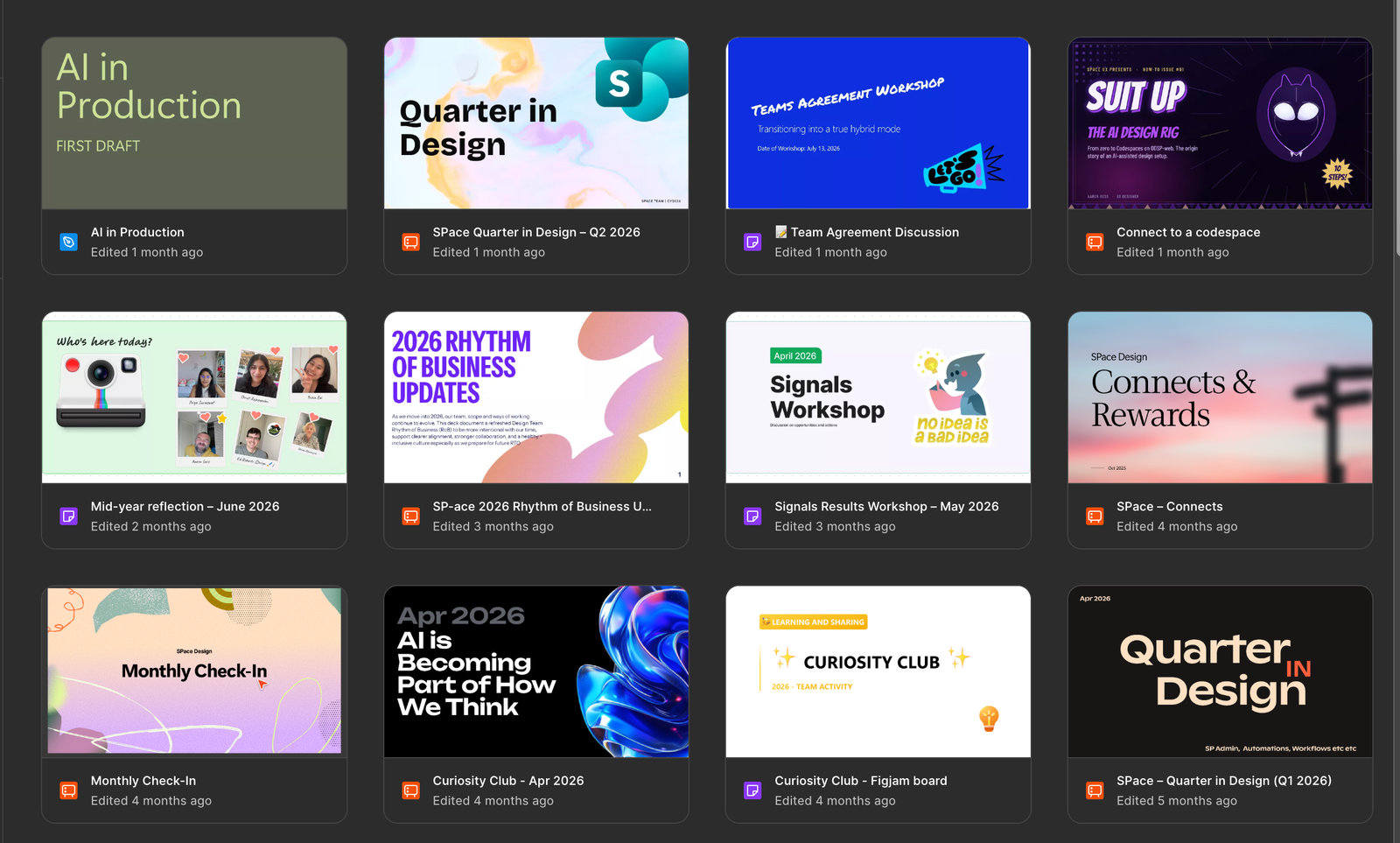
The system I built around the team
An app and operating layer to make priorities, rituals, decisions, and team health easier to see and act on.
A shareout series that helped the team package learning, impact, craft, and strategy into a clearer story.
A rhythm for making business updates more intentional, visible, and useful across stakeholders.
AI operating stack
Where I saved time
I used AI across the tools I already worked in—VS Code, GitHub, Copilot, earlier Claude workflows, Figma AI, Scout, Teams, and SharePoint—to turn recurring leadership tasks into repeatable systems.
Turned blank-page work for shareouts, ROB updates, and workshop framing into fast first passes.
Converted meeting notes, signals, and messy inputs into themes the team could discuss immediately.
Captured repeated prompts, critique structures, and publishing formats so the next cycle started ahead.
Used AI-assisted summaries and action framing to keep decisions, owners, and momentum visible.
AI as a leadership multiplier
I treated AI as a way to help the team lead better: prepare sharper narratives, turn scattered inputs into discussion prompts, draft critique frames, and make recurring updates less expensive to produce.
The point was not to make management more automated. It was to give time back to the work only humans could do well: coach, align, sense tension, build confidence, and make judgment visible.
Shifted the team from status tracking toward ownership, storytelling, and sharper product calls.
Built a practical system for making priorities, rituals, updates, and decision points easier to navigate.
Created a cadence for packaging design impact, learning, and craft into a story the team could share.
Made operating updates more consistent, useful, and connected to strategic progress.
These frameworks gave the team more than process. They created leverage: less time rebuilding the same materials, more time leading conversations, shaping strategy, and helping others move with confidence.
The best management system is not the one that keeps work tidy. It is the one that helps people lead with more clarity, confidence, and momentum.
Impact
The management framework made design’s strategic contribution more visible while saving time across recurring leadership work. It helped the team communicate progress, build shared rituals, use AI thoughtfully, and operate with more confidence across product, leadership, and craft conversations.